






Hayden Adams, the pioneer behind the Uniswap decentralized exchange, has recently brought to light a concerning trend in the cryptocurrency domain: a scam involving the impersonation of Ethereum Name Service (ENS) wallet addresses that endangers user assets.
Adams shared on X (previously known as Twitter) that scammers have craftily cloned and registered his Ethereum wallet address under an ENS domain with a .eth suffix. This deceptive tactic allows the fake address to surface as the primary search outcome in certain interfaces when searching for Adams’ actual wallet address, potentially leading unsuspecting users to send funds to the scammer instead of the intended recipient.
The crux of this scam lies in the misuse of the ENS system, exploiting the simplicity and anonymity of cryptocurrency transactions to the scammer’s advantage. Adams emphasizes the imperative for user interface designs to incorporate mechanisms that can discern and block these fraudulent addresses, thereby mitigating the risk of financial loss to users.
Supporting Adams’ call to action, ENS’s chief developer and founder, Nick Johnson, has voiced his stance on the matter. He advocates for a more reserved use of autocomplete functions in user interfaces, considering them excessively risky and advises against their use in accordance with ENS’s user experience guidelines.
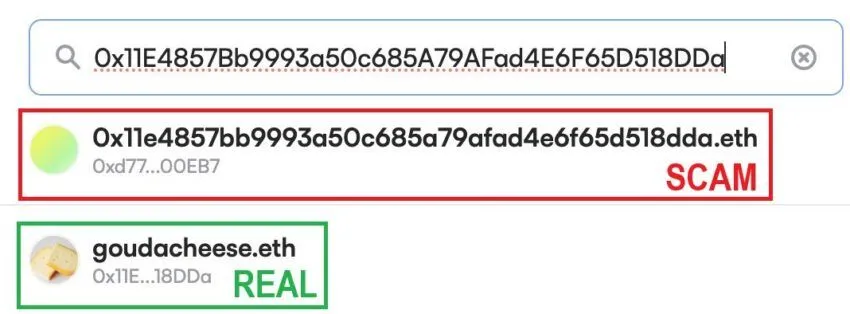
The crypto community, including DeFi advocates like Alex, has expressed frustration over the apparent lack of preemptive action by ENS to curb such fraudulent activities. Suggestions for remedial measures include limiting the character count in .eth addresses, issuing warnings for all such previously created suspicious addresses, and prohibiting the creation of potentially misleading addresses through ENS.
This episode is indicative of a broader pattern of fraudulent schemes that continue to besiege the cryptocurrency ecosystem, ranging from sophisticated email phishing endeavors that mimic reputable crypto entities to deceptive social media traps. The past month alone saw victims defrauded of nearly $600,000 through such phishing scams, with the total losses from various forms of scams and exploits topping $1.8 billion in 2023, highlighting the ongoing battle against digital fraud in the crypto space.